Response of Maize Hybrids at Three Population Densities, in Two Locations in the High Valleys of Mexico
DOI:
https://doi.org/10.28940/terralatinoamericana.v44i.2401Keywords:
H 50, Inifap, grain yield, Unam, Zea mays L.Abstract
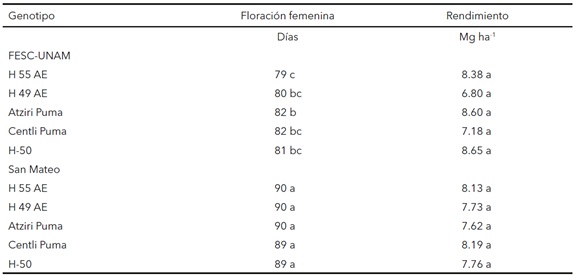
In the High Valleys of Central Mexico (2200–2600 m altitude), it is necessary to evaluate maize varieties and identify the most productive ones in order to recommend suitable options to producers. The Universidad Nacional Autónoma de México (UNAM) and the Instituto Nacional de Investigaciones Forestales, Agrícolas y Pecuarias (INIFAP) have registered and released several maize hybrids and varieties. The objective of this research was to determine the grain yield of five white maize hybrids developed by UNAM and INIFAP under three plant population densities in two localities of the High Valleys of Mexico. Trials were established in localities of the State of Mexico, specifically in Cuautitlán Izcalli and San Mateo, municipality of Amanalco, during the spring–summer 2022 growing season. Variables associated with productivity were evaluated for each hybrid. A combined analysis of variance
was performed considering environments, genotypes (G), population densities, and their interactions as sources of variation. The results showed statistically significant dif ferences in grain yield among the five hybrids evaluated across the two environments and three population densities. For the genotypes and environmental conditions evaluated in both localities, population densities of 50 000 and 70 000 plants ha-¹ are recommended. The evaluated genotypes represent a viable alternative for increasing white maize production among producers in the State of Mexico.
Downloads