Sulfur Fertilization as a Phytosanitary Bioremediation Strategy in Cacao
DOI:
https://doi.org/10.28940/terralatinoamericana.v44i.2427Keywords:
lack pod, moniliophtora, moniliasis, phytophthora, roreriAbstract
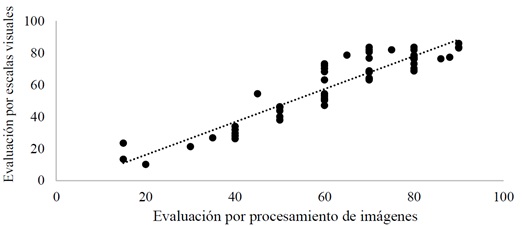
The cultivation of cocoa (Theobroma cacao L.) is an economic pillar in Ecuador, whose productivity depends largely on nutritional and phytosanitary management. Deficient fertilization can increase susceptibility to diseases, negatively af fecting yield. In this context, sulfur (S) has been proposed as a sustainable alternative to improve crop health. The present study aimed to evaluate the ef fect of dif ferent sulfur doses on disease incidence and the agronomic yield of cocoa, variety CCN-51. The trial was conducted in a 10-year-old plantation using a completely randomized block design (CRBD) with four treatments: T1 (control, 0 kg ha–¹ S), T2 (60 kg ha–¹ S), T3 (90 kg ha–¹ S), and T4 (120 kg ha–¹ S). Sulfur was applied in split applications, and agronomic, yield, and phytosanitary variables were evaluated using visual scales and Leaf Doctor sof tware (Pethybridge y Nelson, 2015). The dose of 60 kg ha–¹ S (T2) stood out by decreasing the severity of both diseases, increasing the number of healthy pods, and presenting a favorable benefit/cost ratio (1.13). However, the ef fect of sulfur on yield requires further research to establish definitive recommendations. This study provides evidence of the potential of sulfur as a bioremediating agent in productive cocoa systems, highlighting its value in reducing fungal diseases without compromising system sustainability. It is concluded that sulfur-based nutritional management can improve crop health, of fering a viable alternative for producers in Ecuadorian soils af fected by phytosanitary problems.
Downloads
References
Alcívar-Córdova, K. S., Quezada-Campoverde, J. M., Barrezueta-Unda, S., Garzón-Montealegre, V. J., & Carvajal-Romero, H. (2021). Análisis económico de la exportación del cacao en el Ecuador durante el periodo 2014 - 2019. Polo del Conocimiento, 6(3), 2430–2444. https://doi.org/10.23857/pc.v6i3.2522
Alvarado, M., Ullauri, N., & Benítez, F. (2019). Impacto de exportaciones primarias en el crecimiento económico del Ecuador: análisis econométrico desde Cobb Douglas, período 2000-2017. Revista de la Universidad Internacional del Ecuador, (4), 206–217. https://revistas.uide.edu.ec/index.php/innova/article/view/1140/1668
Álvarez, J. (2021). Alternativa de control de la oidiosis en Arándano (Vaccinium corymbosum) orgánico en Piura [Tesis de pregrado, Universidad Nacional Agraria La Molina].
Álvarez, J. C., Martínez, S. C., & Coy, J. (2014). Estado de la moniliasis del cacao causada por Moniliophthora roreri en Colombia. Acta Agronómica, 63(4), 388–399.
Anecacao. (2019). Estadísticas actuales del sector cacaotero. http://www.anecacao.com/es/estadisticas/estadisticas-actuales.html
Anecacao. (2021). Informe anual de exportaciones de cacao. Asociación Nacional de Exportadores de Cacao.
Aneja, M., Gianinazzi-Pearson, V., & Sreenivasaprasad, S. (2005). Trichoderma harzianum as a biocontrol agent. Biological Control, 34(2), 134–142. https://doi.org/10.1016/j.biocontrol.2005.03.003
Anjum, N. A., Gill, R., Kaushik, M., Hasanuzzaman, M., Pereira, E., Ahmad, I., & Gill, S. S. (2015). ATP-sulfurylase, sulfur-compounds, and plant stress tolerance. Frontiers in Plant Science, 6, 210. https://doi.org/10.3389/fpls.2015.00210
Anjum, N. A., Gill, S. S., Umar, S., Ahmad, I., Duarte, A. C., & Pereira, E. (2012). Improving growth and productivity of oleiferous Brassicas under changing environment: Significance of nitrogen and sulphur nutrition, and underlying mechanisms. The Scientific World Journal, 2012, 657808. https://doi.org/10.1100/2012/657808
Aroca, Á., Gotor, C., Bassham, D. C., & Romero, L. C. (2018). Hydrogen sulfide: From a toxic molecule to a key molecule of cell life. Antioxidants, 9(12), 621. https://doi.org/10.3390/antiox9070621
Arteaga, S. (2019). Eficacia de dos productos a base de Trichoderma, en tres dosis de aplicación para el control de la mancha de hierro (Cercospora coffeicola) y moniliasis (Moniliophthora roreri), en el cantón Francisco de Orellana Prov. Riobamba - Ecuador [Tesis de pregrado, Escuela Superior Politécnica de Chimborazo]. http://dspace.espoch.edu.ec/bitstream/123456789/4828/1/13T0820.pdf
Banco Central del Ecuador. (2019). La economía ecuatoriana creció 4,5% en el tercer trimestre. https://www.bce.fin.ec
Barbedo, J. G. A. (2013). Digital image processing techniques for detecting, quantifying and classifying plant diseases. SpringerPlus, 2, 660. https://doi.org/10.1186/2193-1801-2-660
Barrera, V., Prado, C., & Sarmiento, J. (2019). Caracterización socioeconómica de productores de cacao en Ecuador. Instituto Nacional de Estadística y Censos (INEC).
Barros, O., & Sánchez, J. (1979). Un método de aislamiento del hongo Monilia roreri, Cif y Par. El cacaotero Colombiano, (11).
Begoude, B. A. D., Tondje, P. R., Sikora, R. A., & Weise, S. (2007). Biocontrol of cacao pathogens using Trichoderma asperellum. Crop Protection, 26(4), 564–570. https://doi.org/10.1016/j.cropro.2006.05.006
Bock, C. H., & Chiang, K. S. (2019). Accuracy of visual estimation of disease severity: A review of rater performance and implications for plant pathology. Plant Pathology, 68(6), 1237–1249. https://doi.org/10.1111/ppa.13038
Bock, C. H., Barbedo, J. G. A., Del Ponte, E. M., Bohnenkamp, D., & Mahlein, A.-K. (2020). From visual estimates to fully automated sensor-based measurements of plant disease severity: Status and challenges for improving accuracy. Phytopathology Research, 2(9). https://doi.org/10.1186/s42483-020-00049-8
Bock, C. H., Chiang, K. S., & Barbedo, J. G. A. (2016). Accuracy, reliability, and precision of disease severity estimates: Review of basic concepts and practical implications. Phytopathology, 106(4), 484–496. https://doi.org/10.1094/PHYTO-07-15-0162-RVW
Bock, C. H., Parker, P. E., Cook, A. Z., & Gottwald, T. R. (2009). Visual rating and the use of image analysis for assessing severity of citrus canker symptoms on grapefruit leaves. Plant Disease, 93(6), 660–665. https://doi.org/10.1094/PDIS-93-6-0660
Bock, C. H., Poole, G. H., Parker, P. E., & Gottwald, T. R. (2010). Plant disease severity estimated visually: Review of standard area diagram development and implications for accuracy. Australasian Plant Pathology, 39, 224–238. https://doi.org/10.1071/AP09095
Bock, C. H., Poole, G. H., Parker, P. E., & Gottwald, T. R. (2010). Plant disease severity estimated visually, by digital photography and image analysis, and by hyperspectral imaging. Critical Reviews in Plant Sciences, 29(2), 59–107. https://doi.org/10.1080/07352681003617285
Bridgemohan, P., & Mohammed, A. (2019). Cacao swollen shoot virus transmission and symptoms. Journal of Plant Pathology, 101(3), 553–562. https://doi.org/10.1007/s42161-019-00256-6
Bukari, M., Asare, R., & Owusu, K. (2025). Sweet orange essential oils as emerging biocontrol agents against cacao pathogens. Plant Pathology, 74(6), 1470–1494. https://doi.org/10.1111/ppa.14121
Bürstenbinder, K., & Sauter, M. (2012). Mechanisms of sulfur assimilation and its role in plant development. International Journal of Plant & Soil Science, 35(21), 718–727. https://doi.org/10.9734/IJPSS/2023/v35i214033
Capaldi, F. R., Gratão, P. L., Reis, A. R., Lima, L. W., & Azevedo, R. A. (2015). Sulfur metabolism and stress defense responses in plants. Tropical Plant Biology, 8(3), 60–73. https://doi.org/10.1007/s12042-015-9152-1
Ceita, G. O., Macêdo, J. N., Santos, R. M., & Pereira, G. A. G. (2007). Host metabolism manipulation by Crinipellis perniciosa. Physiological and Molecular Plant Pathology, 70(1–3), 40–52. https://doi.org/10.1016/j.pmpp.2007.06.002
Cortes, C. P., Torrejano, V. M., Ceron, A., & Díaz, G. C. (2025). Evaluación de cepas de Trichoderma spp. para el control de Phytophthora spp. en Theobroma cacao L. en el sur de Colombia. RIAA, 16(1), 10.
Crespo del Campo, E., & Crespo Andía, F. (1997). Cultivo y beneficio del cacao CCN51. Editorial El Conejo.
Chiang, K. S., Liu, H. P., & Bock, C. H. (2016). Effects of rater bias and assessment method on the accuracy of visual disease severity estimates. Plant Pathology, 65(4), 667–677. https://doi.org/10.1111/ppa.12445
Dawar, R., Fahad, S., Alam, S. S., Khan, S. A., & Wahid, F. (2023). Role of sulphur fertilization in legume crops: A comprehensive review. International Journal of Plant & Soil Science, 35(21), 718–727. https://doi.org/10.9734/IJPSS/2023/v35i214033
Del Ponte, E. M., Pethybridge, S. J., & Bock, C. H. (2017). Standard area diagrams for plant disease quantification: Development, validation, and application. Plant Pathology, 66(6), 1020–1029. https://doi.org/10.1111/ppa.12643
Di Rienzo, J. A., Balzarini, M., Gonzalez, L., Casanoves, F., Tablada, M., & Robledo, C. W. (2010). Infostat: Software para análisis estadístico. Universidad Nacional de Córdoba.
dos Santos, I. B., Lima, W. G., & Meinhardt, L. W. (2020). Proteomic modulation in Moniliophthora perniciosa-resistant cacao genotypes. Journal of Proteomics, 220, 103768. https://doi.org/10.1016/j.jprot.2020.103768
Doungous, O., Nwaga, D., & Tchameni, S. N. (2018). Cocoa pod husk compost suppresses Phytophthora infections. International Journal of Recycling of Organic Waste in Agriculture, 7(3), 231–239. https://doi.org/10.1007/s40093-018-0208-1
Erwin, D. C., & Ribeiro, O. K. (1996). Phytophthora diseases worldwide. American Phytopathological Society Press.
Evans, H. C. (2007). Cacao Diseases—The Trilogy Revisited. Phytopathology, 97(12), 1640–1643. https://doi.org/10.1094/PHYTO-97-12-1640
Food and Agriculture Organization of the United Nations. (2020). Cacao fino de aroma: perspectivas y desafíos.
Fatma, M., Masood, A., Per, T. S., & Khan, N. A. (2014). Sulphur supplementation improves photosynthesis and antioxidant defense in plants. Environmental and Experimental Botany, 107, 1–10. https://doi.org/10.1016/j.envexpbot.2014.05.006
García-Briones, A. R., Pico-Pico, B. F., & Jaimez, R. E. (2021). La cadena de producción del cacao en Ecuador: Resiliencia en los diferentes actores de la producción. Novasinergia, 4(2), 152–172. https://doi.org/10.37135/ns.01.08.10
Godoy, C. A. (2022). Control de enfermedades en arroz con aplicación de azufre en diferentes dosis [Tesis de pregrado, Universidad Técnica Estatal de Quevedo].
Godoy, C. V. (2022). Efectos del azufre como agente biocida en el manejo de enfermedades del arroz. Revista de Fitopatología Aplicada, 35(1), 23–30.
González, H., Sadeghian, S., & Mejía, B. (2013). El azufre en los suelos de la zona cafetera colombiana. Cenicafé.
Gutiérrez, O. A., Loor, R. G., & Motamayor, J. C. (2021). SNP markers linked to cacao disease tolerance. Tree Genetics & Genomes, 17(4), 1–12. https://doi.org/10.1007/s11295-021-01513-9
Gyamera, A., Owusu, K., & Appiah, A. A. (2023). CSSV infection process and vector dynamics. African Journal of Agricultural Research, 18(2), 89–97. https://doi.org/10.5897/AJAR2023.16234
Halkier, B. A., & Gershenzon, J. (2006). Biology and biochemistry of glucosinolates. Annual Review of Plant Biology, 57, 303–333. https://doi.org/10.1146/annurev.arplant.57.032905.105228
Hasanuzzaman, M., Nahar, K., Anee, T. I., & Fujita, M. (2017). Glutathione in plant stress tolerance. Plant Physiology and Biochemistry, 112, 1–10. https://doi.org/10.1016/j.plaphy.2017.01.007
Hell, R., Khan, M. S., & Wirtz, M. (2010). Cellular biology of sulfur and its functions in plants. In R. Hell & R.-R. Mendel (Eds.), Cell Biology of Metals and Nutrients (pp. 243–279). Springer. https://doi.org/10.1007/978-3-642-10613-2_10
Hernández, J. L., & Sandoval, A. D. (2021). Escala diagramática de severidad para el complejo mancha de asfalto del maíz. Revista Científica Agroecológica, 12(2), 105–113.
Hernández, M., & Sandoval, J. (2021). Limitaciones de la evaluación visual en fitopatología: implicaciones para la precisión diagnóstica. Boletín Técnico de Sanidad Vegetal, 29(1), 12–20.
Herrera Eguez, F. E., Herrera Eguez, C. G., Ramírez Montesdeoca, W. A., & Beltrán Muñoz, L. E. (2024). Exploring silicon dose effects on disease and cadmium control in CCN-51 cacao (Theobroma cacao) via image processing. Nanotechnology Perceptions, 20(S13), 340–356. https://doi.org/10.62441/nano-ntp.vi.2480
Huang, Y., Wang, W., & Yu, H. (2021). Protein persulfidation and its role in plant stress responses. Frontiers in Plant Science, 12, 667903. https://doi.org/10.3389/fpls.2021.667903
International Cocoa Organization. (2019). Annual report on global cacao production losses. https://www.icco.org
International Cocoa Organization. (2021). Annual Report 2020/2021.
Instituto Nacional de Meteorología e Hidrología. (2024, 14 de octubre). Boletín No. 07 - 2024. https://servicios.inamhi.gob.ec/clima1/
Jamal, A., Moon, Y., & Abdin, M. Z. (2010). Sulphur—a general overview and interaction with nitrogen. Australian Journal of Crop Science, 4(7), 523–529.
Larrainzar, E., Wienkoop, S., Weckwerth, W., Ladrera, R., Arrese-Igor, C., & González, E. M. (2007). Medicago truncatula root nodule proteome analysis reveals differential plant and bacteroid responses to drought stress. Plant Physiology, 144(3), 1495–1507. https://doi.org/10.1104/pp.107.101618
León, F., Salazar, J., & Quinteros, E. (2016). Estrategias para el cultivo, comercialización y exportación del cacao fino de aroma en Ecuador. Revista Ciencia UNEMI, 9(18), 45–55.
Li, Z. G., Yi, X. Y., & Li, Y. T. (2021). Crosstalk between hydrogen sulfide and other signaling molecules in plant stress responses. Plant Cell Reports, 40(3), 439–456. https://doi.org/10.1007/s00299-020-02643-8
Madden, L. V., Hughes, G., & van den Bosch, F. (2007). The study of plant disease epidemics. APS Press.
Mahlein, A.-K. (2016). Plant disease detection by imaging sensors--parallels and specific demands for precision agriculture and plant phenotyping. Plant Disease, 100(2), 241–251. https://doi.org/10.1094/PDIS-03-15-0318-FE
Mahlein, A.-K., Steiner, U., Dehne, H. W., & Oerke, E. C. (2012). Spectral signatures of sugar beet leaves for the detection and differentiation of diseases. Precision Agriculture, 13(6), 595–612. https://doi.org/10.1007/s11119-012-9277-8
Meinhardt, L. W., Costa, G. G. L., & Rincones, J. (2008). Impact of witches' broom disease in Bahia, Brazil. Plant Pathology, 57(5), 997–1008. https://doi.org/10.1111/j.1365-3059.2008.01864.x
Ministerio de Agricultura y Ganadería del Ecuador. (2024). Operativos de rendimientos objetivos: Rendimiento de cacao. Sistema de Información Pública Agropecuaria (SIPA). https://sipa.agricultura.gob.ec/index.php/informe-de-rendimientos-objetivos/rendimiento-de-cacao
Mondego, J. M. C., Carazzolle, M. F., Costa, G. G. L., Formighieri, E. F., Parizzi, A. R., & Rincones, J. (2008). A genome survey of Moniliophthora perniciosa gives new insights into Witches' Broom Disease of cacao. BMC Genomics, 9, 548. https://doi.org/10.1186/1471-2164-9-548
Montes, J. A. (2023). Efectos del fósforo y azufre sobre el rendimiento de mazorcas, en una plantación de cacao (Theobroma cacao L.) CCN-51, en la zona de Babahoyo [Tesis de pregrado, Universidad Técnica de Babahoyo].
Montes, M. (2016). Efectos del fósforo y azufre sobre el rendimiento de mazorcas en una plantación de cacao (Theobroma cacao L.) CCN-51, en la zona de Babahoyo [Tesis de pregrado, Universidad Técnica de Babahoyo].
Mutka, A. M., & Bart, R. S. (2015). Image-based phenotyping of plant disease symptoms. Frontiers in Plant Science, 5, 734. https://doi.org/10.3389/fpls.2014.00734
Nutter, F. W., Jr., Gleason, M. L., Jenco, J. H., & Christians, N. C. (1993). Assessing the accuracy, intra-rater repeatability, and inter-rater reliability of disease assessment systems. Phytopathology, 83(8), 806–812. https://doi.org/10.1094/Phyto-83-806
Nutter, F. W., Jr., Gleason, M. L., & Jenco, J. H. (1991). Reliability, accuracy, and precision of disease assessment systems. Phytopathology, 81(12), 1461–1465. https://doi.org/10.1094/Phyto-81-1461
Paredes, M. (2003). Manual de cultivo del cacao. Ministerio de Agricultura y Riego, Perú.
Perrine-Walker, F. (2020). Phytophthora palmivora infection biology. Frontiers in Plant Science, 11, 1234. https://doi.org/10.3389/fpls.2020.01234
Pethybridge, S. J., & Nelson, S. C. (2015). Leaf Doctor: A new portable application for quantifying plant disease severity. Plant Disease, 99(10), 1310–1316. https://doi.org/10.1094/PDIS-03-15-0319-RE
Pilaloa, W., Pérez, D., Alvarado, A., & Torres, S. (2021). Manejo agroecológico de la Moniliasis en el cultivo de cacao (Theobroma cacao) mediante la utilización de biofungicidas y podas fitosanitarias en el cantón La Troncal. Alfa Revista de Investigación en Ciencias Agronómicas y Veterinaria, 5(15), 70–85. https://doi.org/10.33996/revistaalfa.v5i15.129
Rasool, F. U., Hassan, B., & Jahangir, I. A. (2013). Growth and yield of sunflower (Helianthus annus L.) as influenced by nitrogen, sulphur and farmyard manure under temperate conditions. SAARC Journal of Agriculture, 11(1), 81–89. https://doi.org/10.3329/sja.v11i1.18391
Rasool, R. (2023). Effect of sulphur fertilization on oil content and yield in pulses. International Journal of Plant & Soil Science, 35(21), 718–727. https://doi.org/10.9734/IJPSS/2023/v35i214033
Relación entre el azufre y el cultivo de cacao. (2024). La Colina Cacao Plus. https://lacolina.com.ec/service/cacao-plus/
Romero, L. C., Aroca, Á., Laureano-Marín, A. M., Moreno, I., García, I., & Gotor, C. (2014). Cysteine metabolism in plants: the role of O-acetylserine(thiol)lyase. Frontiers in Plant Science, 5, 1–9. https://doi.org/10.3389/fpls.2014.00005
Salvagiotti, F., & Miralles, D. J. (2008). Radiation interception, biomass production and grain yield as affected by the interaction of nitrogen and sulfur fertilization in wheat. European Journal of Agronomy, 28(3), 282–290. https://doi.org/10.1016/j.eja.2007.08.002
Scherer, H. W. (2001). Sulphur in crop production. European Journal of Agronomy, 14(2), 81–111. https://doi.org/10.1016/S1161-0301(00)00082-4
Simko, I., Poudel, A., & Hayes, R. J. (2017). Phenomic approaches to plant disease severity estimation and cultivar evaluation. Plant Pathology, 66(1), 36–44. https://doi.org/10.1111/ppa.12559
Sornoza Vélez, L., Valencia Carreño, L., Corozo-Quiñónez, L., Sánchez Mora, F., Salas-Macías, C., & Peña Monserrate, G. (2022). Recursos genéticos de cacao tipo Nacional en Ecuador: una revisión sistemática. Ciencia y Tecnología UTEQ, 15(2), 30–42. https://doi.org/10.18779/cyt.v15i2.582
Suárez Capello, C., Moreira Duque, M., & Vera Barahona, J. (1994). Manual del cultivo de cacao. Instituto Nacional Autónomo de Investigaciones Agropecuarias (INIAP). https://repositorio.iniap.gob.ec/items/87aa3665-fbfb-4aad-915d-6ed244973834
ten Hoopen, G. M., Krauss, U., & Hidalgo, E. (2012). Global yield losses due to cacao diseases. Outlook on Agriculture, 41(1), 29–35. https://doi.org/10.5367/oa.2012.0072
Vélez, J. (2018). Evaluación de la respuesta de cacao CCN-51 a plena exposición solar a las aplicaciones de Azufre (S) y Magnesio (Mg) en la zona de Zapotal, Provincia de Los Ríos [Tesis de pregrado, Universidad Técnica Estatal de Quevedo].
Vélez, R. M. C. (2022). Evaluación de la respuesta del cultivo de cacao CCN-51 creciendo a plena exposición solar frente a la aplicación de S y Mg [Tesis de pregrado, Universidad Técnica Estatal de Quevedo].
Ventimiglia, L., Carta, H., & Rillo, S. (2004). Azufre: Un caballo sin domar. INTA.
Vinces-Tachong, R. E., Vélez-Ruiz, M. C., Gaibor-Fernández, R. R., & Herrera-Eguez, F. E. (2022). Implementación del procesamiento de imágenes para la evaluación de la mancha de asfalto (Phyllachora maydis) en maíz (Zea mays). Terra Latinoamericana, 40, e1066. https://doi.org/10.28940/terra.v40i0.1066
Walker, C. A., & van West, P. (2007). Zoospore development in the oomycetes. Fungal Biology Reviews, 21(1), 10–18. https://doi.org/10.1016/j.fbr.2007.02.001
Williams, J. S., & Cooper, R. M. (2004). The oldest fungicide and newest phytoalexin--a reappraisal of the fungitoxicity of elemental sulphur. Plant Pathology, 53(3), 263–279. https://doi.org/10.1111/j.0032-0862.2004.01012.x
Wood, G. A. R. (1985). Historical impact of cacao diseases in Ecuador. Tropical Agriculture, 62(1), 1–9.
Yadav, V., Bock, C. H., & Chiang, K. S. (2013). Accuracy of visual estimation of disease severity using standard area diagrams and implications for rater training. Plant Pathology, 62(6), 1357–1365. https://doi.org/10.1111/ppa.12044
Zarrillo, S., Gaikwad, N., Lanaud, C., Powis, T., Viot, C., Lesur, I., & Fouet, O. (2018). The use and domestication of Theobroma cacao during the mid-Holocene in the upper Amazon. Nature Ecology & Evolution, 2(12), 1879–1888. https://doi.org/10.1038/s41559-018-0697-x
Zenda, T., Liu, S., Dong, A., & Duan, H. (2021). Revisiting sulphur—the once neglected nutrient: Its roles in plant growth, metabolism, stress tolerance and crop production. Agriculture, 11(7), 626. https://doi.org/10.3390/agriculture11070626
Zhang, D., & Motilal, L. A. (2016). Genetic erosion and disease outbreaks in cacao. Genetic Resources and Crop Evolution, 63(1), 139–153. https://doi.org/10.1007/s10722-015-0243-3
Zhao, F., Tausz, M., & De Kok, L. J. (2008). Role of sulfur for plant production in agricultural and natural ecosystems. In R. Hell, C. Dahl, D. B. Knaff, & T. Leustek (Eds.), Sulfur Metabolism in Phototrophic Organisms (pp. 417–435). Springer. https://doi.org/10.1007/978-1-4020-6863-5_27