Soil Biocontrol Agent: Trichoderma spp. Against Ralstonia solanacearum Race 2 in Bananas
DOI:
https://doi.org/10.28940/terralatinoamericana.v44i.2489Keywords:
biostimulant, control ef ficiency, phytopathogen, bacterial wilt, rAUDPCAbstract
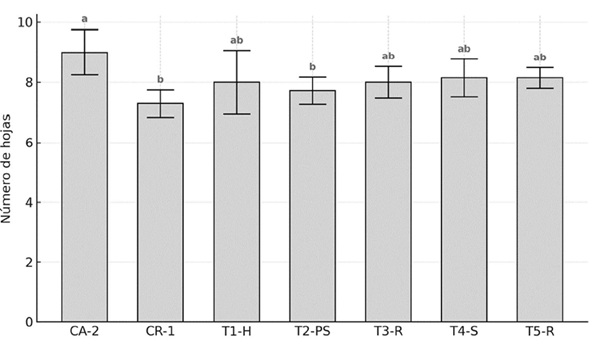
Bacterial wilt of banana caused by Ralstonia solanacearum race 2 is one of the main phytosanitary threats in Ecuador, particularly in Quevedo, Los Ríos Province. The objective of this study was to evaluate the ef ficacy of five Trichoderma spp. isolates as biocontrol agents against R. solanacearum and their ef fect on the vegetative performance of banana plants under greenhouse conditions. A completely randomized design (CRD) was used with five Trichoderma spp. treatments from dif ferent geographical locations and botanical origins: T1-H (T. asperellum), T2-PS (T. asperellum), T3-R (T. harzianum), T4-S (T. harzianum), and T5-R (T. asperellum), along with a positive control (inoculated only with the phytopathogen) and a negative control (non-inoculated). Incidence and severity were evaluated fortnightly using a 0–4 scale expressed as a percentage. The relative area under the disease progress curve (rAUDPC) was calculated as an integrated measure of temporal disease development, control ef ficiency was estimated using Abbott’s formula, and growth variables, including plant height, pseudostem diameter, number of leaves, leaf area, root area, and fresh and dry biomass by organ and total biomass, were recorded. Compared with the R. solanacearum-inoculated control, T5-R, T4-S, and T1-H reduced disease severity from 30 days af ter inoculation (DAI) and decreased rAUDPC by approximately 72, 60, and 52%, respectively. In addition, these treatments maintained plant height, pseudostem diameter, and number of leaves at levels comparable to the negative control, with an improvement in root area observed in T5-R. Final disease incidence decreased by 28–43%, although no statistically significant dif ferences were detected, and fresh and dry biomass showed only recovery trends. The biocontrol ef fect depended on the isolate evaluated; T5-R and T4-S may represent viable biocontrol alternatives in banana cultivation, as they ef fectively limited the temporal progression of bacterial wilt without negatively af fecting plant growth and development.
Downloads