Genes From Microorganisms Used as Biomarkers to Detect Soil Health
DOI:
https://doi.org/10.28940/terralatinoamericana.v43i.2301Keywords:
biosensors, contaminants, edaphic degradation, reporter systemsAbstract
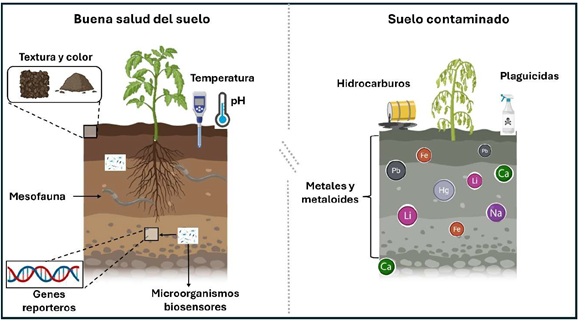
Soil health is essential for ecosystem stability, biodiversity, and food security. Soil degradation and contamination adversely af fect soil fertility; therefore, continuous monitoring of physicochemical and biological indicators is required to support sustainable agricultural systems. Biosensors enable the detection of analytes in soil and water, providing rapid alerts and complementing conventional analytical methods. These biosensors, which may include tissues, microbial cultures, enzymes, and antibodies, are widely applied in environmental monitoring, food safety, and medical fields for the detection of a broad range of analytes. In this context, the use of reporter genes endogenously present in organisms is recommended, as they allow the detection of compounds under specific conditions and are extensively used due to their precision and accurate quantification of contaminant concentrations. This review article compiles updated global information with the objective of synthesizing the most relevant factors af fecting soil functionality and limiting its productive potential; additionally, it aims to provide a comprehensive overview of the importance of, and alternatives developed in, various studies for assessing soil health, thereby supporting timely decision-making for its immediate management.
Downloads
Publication Facts
Reviewer profiles N/A
Author statements
- Editor & editorial board
- profiles
- Academic society
- Terra Latinoamericana
- Publisher
- Mexican Society of Soil Science, C.A.

To learn about these publication facts, click 
PF is maintained by the Public Knowledge Project
References
Abbas, S. Z., Wang, J. Y., Wang, H., Wang, J. X., Wang, Y. T., & Yong, Y. C. (2022). Recent advances in soil microbial fuel cells based self-powered biosensor. Chemosphere, 303, 135036. https://doi.org/10.1016/j.chemosphere.2022.135036
Ahmad, R. G., & Kumar, V. (2020). Microorganism based biosensors to detect soil pollutants. Plant Archives, 20(2), 2509-2516.
Alengebawy, A., Abdelkhalek, S. T., Qureshi, S. R., & Wang, M. Q. (2021). Heavy metals and pesticides toxicity in agricultural soil and plants: Ecological risks and human health implications. Toxics, 9(3), 42. https://doi.org/10.3390/toxics9030042
Ali, H., & Khan, E. (2018). Trophic transfer, bioaccumulation, and biomagnification of non-essential hazardous heavy metals and metalloids in food chains/webs—Concepts and implications for wildlife and human health. Human and Ecological Risk Assessment: An International Journal, 25(6), 1353–1376. https://doi.org/10.1080/10807039.2018.1469398
Ammann D. (1986).Ion-Selective Microelectrodes: Principles, Design and Application. Berlin: Springer-Verlag.
Andriukonis, E., Celiesiute-Germaniene, R., Ramanavicius, S., Viter, R., & Ramanavicius, A. (2021). From microorganism-based amperometric biosensors towards microbial fuel cells. Sensors, 21(7), 2442. https://doi.org/10.3390/s21072442
Aynalem, B., & Muleta, D. (2021). Microbial biosensors as pesticide detector: an overview. Journal of Sensors, 2021, 1-9. https://doi.org/10.1155/2021/5538857
Baumbauer, C. L., Goodrich, P. J., Payne, M. E., Anthony, T., Beckstoffer, C., Toor, A., ... & Arias, A. C. (2022). Printed potentiometric nitrate sensors for use in soil. Sensors, 22(11), 4095. https://doi.org/10.3390/s22114095
Bennardi, D. O., Díaz Gorostegui, A., Juan, L., Millan, G., Pellegrini, A. E., & Vázquez, M. E. (2018). Evaluación de la capacidad buffer de suelos ácidos de la Región Pampeana. Ciencia Del Suelo, 36(1). Recuperado a partir de https://www.ojs.suelos.org.ar/index.php/cds/article/view/325
Bhatia, D., Paul, S., Acharjee, T., & Ramachairy, S. S. (2024). Biosensors and their widespread impact on human health. Sensors International, 5. https://doi.org/10.1016/j.sintl.2023.100257.
Blanco‐Canqui, H., Ruis, S. J., & Francis, C. A. (2024). Do organic farming practices improve soil physical properties?. Soil Use and Management, 40(1), e12999. https://doi.org/10.1111/sum.12999
Brandsen, B. M., Mattheisen, J. M., Noel, T., & Fields, S. (2018). A Biosensor Strategy for E. coli Based on Ligand-Dependent Stabilization. ACS synthetic biology, 7(9), 1990–1999. https://doi.org/10.1021/acssynbio.8b00052
Brutesco, C., Prévéral, S., Escoffier, C., Descamps, E. C. T., Prudent, E., Cayron, J., Dumas, L., Ricquebourg, M., Adryanczyk-Perrier, G., de Groot, A., Garcia, D., Rodrigue, A., Pignol, D., & Ginet, N. (2017). Bacterial host and reporter gene optimization for genetically encoded whole cell biosensors. Environmental science and pollution research international, 24(1), 52–65. https://doi.org/10.1007/s11356-016-6952-2
Burmølle, M., Hansen, L.H., Sørensen, S.J. (2006). Reporter Gene Technology in Soil Ecology; Detection of Bioavailability and Microbial Interactions. In: Nannipieri, P., Smalla, K. (eds) Nucleic Acids and Proteins in Soil. Soil Biology, vol 8. Springer, Berlin, Heidelberg . https://doi.org/10.1007/3-540-29449-X_17
Bustamante-Torres, M., Torres, O., Abad Sojos, S., Pardo, S., & Bucio, E. (2024). Application of genetically modified microorganisms for bioremediation of polluted environments. In Genetically Engineered Organisms in Bioremediation (pp. 18-51). (Genetically Engineered Organisms in Bioremediation). CRC Press. https://doi.org/10.1201/9781003188568-2
Changtor, P., Rodriguez-Mateos, P., Buddhachat, K., Wattanachaiyingcharoen, W., Iles, A., Kerdphon, S., Yimtragool, N., & Pamme, N. (2024). Integration of IFAST-based nucleic acid extraction and LAMP for on-chip rapid detection of Agroathelia rolfsii in soil. Biosensors & bioelectronics, 250, 116051. https://doi.org/10.1016/j.bios.2024.116051
Crowther, T. W., van den Hoogen, J., Wan, J., Mayes, M. A., Keiser, A. D., Mo, L., Averill, C., & Maynard, D. S. (2019). The global soil community and its influence on biogeochemistry. Science (New York, N.Y.), 365(6455), eaav0550. https://doi.org/10.1126/science.aav0550
Cruz-Macías, Wel Olveín, Rodríguez-Larramendi, Luis Alfredo, Salas-Marina, Miguel Ángel, Hernández-García, Vidal, Campos-Saldaña, Rady Alejandra, Chávez-Hernández, Moisés Hussein, & Gordillo-Curiel, Alder. (2020). Efecto de la materia orgánica y la capacidad de intercambio catiónico en la acidez de suelos cultivados con maíz en dos regiones de Chiapas, México. Terra Latinoamericana, 38(3), 475-480. Epub 12 de enero de 2021.https://doi.org/10.28940/terra.v38i3.506
De Novais, C. B., Avio, L., Giovannetti, M., de Faria, S. M., Siqueira, J. O., and Sbrana, C. (2019). Interconnectedness, length and viability of arbuscular mycorrhizal mycelium as affected by selected herbicides and fungicides. Appl. Soil Ecol. 143, 144–152. https://doi.org/10.1016/j.apsoil.2019.06.013
Dieudonné, A., Prévéral, S., & Pignol, D. (2020). A Sensitive Magnetic Arsenite-Specific Biosensor Hosted in Magnetotactic Bacteria. Applied and environmental microbiology, 86(14), e00803-20. https://doi.org/10.1128/AEM.00803-20
Duan, M., Li, Y., Zhu, G., Wu, X., Huang, H., Qin, J., Long, S., Li, X., Feng, B., Qin, S., Liu, Q. H., Li, C., Wang, L., Li, Q., He, T., & Wang, Z. (2023). Soil chemistry, metabarcoding, and metabolome analyses reveal that a sugarcane-Dictyophora indusiata intercropping system can enhance soil health by reducing soil nitrogen loss. Frontiers in microbiology, 14, 1193990. https://doi.org/10.3389/fmicb.2023.1193990
Dudek, M., Łabaz, B., Bednik, M., & Medyńska-Juraszek, A. (2022). Humic Substances as Indicator of Degradation Rate of Chernozems in South-Eastern Poland. Agronomy, 12(3), 733. https://doi.org/10.3390/agronomy12030733
Fall, A. F., Nakabonge, G., Ssekandi, J., Founoune-Mboup, H., Apori, S. O., Ndiaye, A., Badji, A., & Ngom, K. (2022). Roles of Arbuscular Mycorrhizal Fungi on Soil Fertility: Contribution in the Improvement of Physical, Chemical, and Biological Properties of the Soil. Frontiers in fungal biology, 3, 723892. https://doi.org/10.3389/ffunb.2022.723892
Fu, B., Chen, L., Huang, H., Qu, P., & Wei, Z. (2021). Impacts of crop residues on soil health: a review. Environmental Pollutants and Bioavailability, 33(1), 164–173. https://doi.org/10.1080/26395940.2021.1948354
Ghori, N.H.; Ghori, T.; Hayat, M.Q.; Imadi, S.R.; Gul, A.; Altay, V.; Ozturk, M. Heavy metal stress and responses in plants. Int. J. Envn. Sci. Technol. 2019, 16, 1807–1828. https://doi.org/10.1007/s13762-019-02215-8
Ghosh, A., Singh, A. K., Kumar, S., Manna, M. C., Bhattacharyya, R., Agnihortri, R., ... & Chaudhari, S. K. (2020). Differentiating biological and chemical factors of top and deep soil carbon sequestration in semi-arid tropical Inceptisol: an outcome of structural equation modeling. Carbon Management, 11(5), 441-453. https://doi.org/10.1080/17583004.2020.1796143
Ghosh, S., Baltussen, M. G., Ivanov, N. M., Haije, R., Jakštaitė, M., Zhou, T., & Huck, W. T. S. (2024). Exploring Emergent Properties in Enzymatic Reaction Networks: Design and Control of Dynamic Functional Systems. Chemical reviews, 124(5), 2553–2582. https://doi.org/10.1021/acs.chemrev.3c00681
Guan, Y., Grote, K., Schott, J., & Leverett, K. (2022). Prediction of Soil Water Content and Electrical Conductivity Using Random Forest Methods with UAV Multispectral and Ground-Coupled Geophysical Data. Remote Sensing, 14(4), 1023. https://doi.org/10.3390/rs14041023
Hartemink, A.E., Barrow, N.J. (2023). Soil pH - nutrient relationships: the diagram. Plant Soil 486, 209–215. https://doi.org/10.1007/s11104-022-05861-z
Hashimoto, S., & Suzuki, M. (2004). The impact of forest clear-cutting on soil temperature: a comparison between before and after cutting, and between clear-cut and control sites. Journal of Forest Research, 9(2), 125–132. https://doi.org/10.1007/s10310-003-0063-x
He, M. Y., Lin, Y. J., Kao, Y. L., Kuo, P., Grauffel, C., Lim, C., Cheng, Y. S., & Chou, H. D. (2021). Sensitive and Specific Cadmium Biosensor Developed by Reconfiguring Metal Transport and Leveraging Natural Gene Repositories. ACS sensors, 6(3), 995–1002. https://doi.org/10.1021/acssensors.0c02204
Herath, H. M. L. P. B., de Silva, W. R. M., Dassanayake, R. S., Gunawardene, Y. I. N. S., Jayasingha, J. R. P., Gayashan, M. K., Afonso, L. O. B., & de Silva, K. M. N. (2023). Validation and calibration of a novel GEM biosensor for specific detection of Cd2+, Zn2+, and Pb2. BMC biotechnology, 23(1), 52. https://doi.org/10.1186/s12896-023-00820-7
Huang, C. W., Lin, C., Nguyen, M. K., Hussain, A., Bui, X. T., & Ngo, H. H. (2023). A review of biosensor for environmental monitoring: principle, application, and corresponding achievement of sustainable development goals. Bioengineered, 14(1), 58–80. https://doi.org/10.1080/21655979.2022.2095089
Hurisso, T. T., Moebius‐Clune, D. J., Culman, S. W., Moebius‐Clune, B. N., Thies, J. E., & van Es, H. M. (2018). Soil protein as a rapid soil health indicator of potentially available organic nitrogen. Agricultural & Environmental Letters, 3(1), 180006. https://doi.org/10.2134/ael2018.02.0006
Jaworska, H., & Lemanowicz, J. (2019). Heavy metal contents and enzymatic activity in soils exposed to the impact of road traffic. Scientific Reports, 9(1), 19981. https://doi.org/10.1038/s41598-019-56418-7
Kaur, H., Kumar, R., Babu, J. N., & Mittal, S. (2015). Advances in arsenic biosensor development--a comprehensive review. Biosensors & bioelectronics, 63, 533–545. https://doi.org/10.1016/j.bios.2014.08.003
Kebede, G., Tafese, T., Abda, E. M., Kamaraj, M., and Assefa, F. (2021). Factors influencing the bacterial bioremediation of hydrocarbon contaminants in the soil: mechanisms and impacts. J. Chem. 2021, 1–17. https://doi.org/10.1155/2021/9823362
Keller, T., Colombi, T., Ruiz, S., Schymanski, S. J., Weisskopf, P., Koestel, J., ... & Or, D. (2021). Soil structure recovery following compaction: Short‐term evolution of soil physical properties in a loamy soil. Soil Science Society of America Journal, 85(4), 1002-1020. https://doi.org/10.1002/saj2.20240
Kim, H., Park, Y. H., Yang, J. E., Kim, H. S., Kim, S. C., Oh, E. J., Moon, J., Cho, W., Shin, W., & Yu, C. (2022). Analysis of Major Bacteria and Diversity of Surface Soil to Discover Biomarkers Related to Soil Health. Toxics, 10(3), 117. https://doi.org/10.3390/toxics10030117
Lal, R. (2015). Restoring Soil Quality to Mitigate Soil Degradation. Sustainability, 7(5), 5875-5895. https://doi.org/10.3390/su7055875
Li, Y., Li, W., Ji, L., Song, F., Li, T., Fu, X., Li, Q., Xing, Y., Zhang, Q., & Wang, J. (2022). Effects of Salinity on the Biodegradation of Polycyclic Aromatic Hydrocarbons in Oilfield Soils Emphasizing Degradation Genes and Soil Enzymes. Frontiers in microbiology, 12, 824319. https://doi.org/10.3389/fmicb.2021.824319
Lim, J. W., Ha, D., Lee, J., Lee, S. K., & Kim, T. (2015). Review of micro/nanotechnologies for microbial biosensors. Frontiers in bioengineering and biotechnology, 3, 61. https://doi.org/10.3389/fbioe.2015.00061
Liu, X., Silverman, A. D., Alam, K. K., Iverson, E., Lucks, J. B., Jewett, M. C., & Raman, S. (2020). Design of a Transcriptional Biosensor for the Portable, On-Demand Detection of Cyanuric Acid. ACS synthetic biology, 9(1), 84–94. https://doi.org/10.1021/acssynbio.9b00348
Lobsey, C., Rossel, R.V., McBratney, A. (2010). Proximal Soil Nutrient Sensing Using Electrochemical Sensors. In: Viscarra Rossel, R., McBratney, A., Minasny, B. (eds) Proximal Soil Sensing. Progress in Soil Science. Springer, Dordrecht. https://doi.org/10.1007/978-90-481-8859-8_6
López Báez, W., R. Reynoso-Santos, J. López-Martínez, B. Villar-Sánchez, R. Camas-Gómez y J. García-Santiago. 2019. Caracterización físico-química de suelos cultivados con maíz en Villaflores, Chiapas. Rev. Mex. Cienc. Agríc. 10: 897-910. doi: https://doi.org/10.29312/remexca.v10i4.1764.
Lopreside, A., Wan, X., Michelini, E., Roda, A., & Wang, B. (2019). Comprehensive Profiling of Diverse Genetic Reporters with Application to Whole-Cell and Cell-Free Biosensors. Analytical chemistry, 91(23), 15284–15292. https://doi.org/10.1021/acs.analchem.9b04444
Martínez, S. A. , Cancela, L. M., & Virgolini, M. B. (2011). El estrés oxidativo como mecanismo de acción del plomo: Implicancias terapéuticas. Acta toxicológica argentina, 19(2), 61-79.
Mathur, S., Singh, D., & Ranjan, R. (2023). Genetic circuits in microbial biosensors for heavy metal detection in soil and water. Biochemical and Biophysical Research Communications, 652, 131-137. https://doi.org/10.1016/j.bbrc.2023.02.031
Mekonnen, B. A., Aragaw, T. A., & Genet, M. B. (2024). Bioremediation of petroleum hydrocarbon contaminated soil: a review on principles, degradation mechanisms, and advancements. Frontiers in Environmental Science, 12, 1354422. https://doi.org/10.3389/fenvs.2024.1354422
Mikhailova, E. A., Zurqani, H. A., Lin, L., Hao, Z., Post, C. J., Schlautman, M. A., & Shepherd, G. B. (2024). Possible Integration of Soil Information into Land Degradation Analysis for the United Nations (UN) Land Degradation Neutrality (LDN) Concept: A Case Study of the Contiguous United States of America (USA). Soil Systems, 8(1), 27. https://doi.org/10.3390/soilsystems8010027
Mohapatra, A. G., & Lenka, S. K. (2015). Sensor system technology for soil parameter sensing in precision agriculture: a review. J Agric Phys, 15(2), 181-202.
Mulchandani, P., Chen, W., Mulchandani, A., Wang, J., & Chen, L. (2001). Amperometric microbial biosensor for direct determination of organophosphate pesticides using recombinant microorganism with surface expressed organophosphorus hydrolase. Biosensors & bioelectronics, 16(7-8), 433–437. https://doi.org/10.1016/s0956-5663(01)00157-9
Ng, S. P., Palombo, E. A., & Bhave, M. (2012). Identification of a copper-responsive promoter and development of a copper biosensor in the soil bacterium Achromobacter sp. AO22. World journal of microbiology & biotechnology, 28(5), 2221–2228. https://doi.org/10.1007/s11274-012-1029-y
Niu, Y. Y., Zhang, Y. Y., Zhu, Z., Zhang, X. Q., Liu, X., Zhu, S. Y., Song, Y., Jin, X., Lindholm, B., & Yu, C. (2020). Elevated intracellular copper contributes a unique role to kidney fibrosis by lysyl oxidase mediated matrix crosslinking. Cell death & disease, 11(3), 211. https://doi.org/10.1038/s41419-020-2404-5
Nourmohammadi, E., Hosseinkhani, S., Nedaeinia, R. et al. Construction of a sensitive and specific lead biosensor using a genetically engineered bacterial system with a luciferase gene reporter controlled by pbr and cadA promoters. BioMed Eng OnLine 19, 79 (2020). https://doi.org/10.1186/s12938-020-00816-w
Obalum, S. E., Chibuike, G. U., Peth, S., & Ouyang, Y. (2017). Soil organic matter as sole indicator of soil degradation. Environmental monitoring and assessment, 189(4), 176. https://doi.org/10.1007/s10661-017-5881-y
Pourret, O., & Hursthouse, A. (2019). It's Time to Replace the Term "Heavy Metals" with "Potentially Toxic Elements" When Reporting Environmental Research. International journal of environmental research and public health, 16(22), 4446. https://doi.org/10.3390/ijerph16224446
Rakotonindrina, H., Moritsuka, N., Kawamura, K., Tsujimoto, Y., Nishigaki, T., Andrianary, H. B., … Andriamananjara, A. (2022). Prediction of the soil properties of Malagasy rice soils based on the soil color and magnetic susceptibility. Soil Science and Plant Nutrition, 69(1), 24–35. https://doi.org/10.1080/00380768.2022.2136929
Rosenberg, R., Bono, M. S., Jr, Braganza, S., Vaishnav, C., Karnik, R., & Hart, A. J. (2018). In-field determination of soil ion content using a handheld device and screen-printed solid-state ion-selective electrodes. PloS one, 13(9), e0203862. https://doi.org/10.1371/journal.pone.0203862
Sahu, G., Bag, A. G., Chatterjee, N., & Mukherjee, A. K. (2017). Potential use of flyash in agriculture: A way to improve soil health. Journal of Pharmacognosy and Phytochemistry, 6(6), 873-880.
Sartori, M., Ferrari, E., M'Barek, R., Philippidis, G., Boysen-Urban, K., Borrelli, P., ... & Panagos, P. (2024). Remaining Loyal to Our Soil: A Prospective Integrated Assessment of Soil Erosion on Global Food Security. Ecological Economics, 108103. https://doi.org/10.1016/j.ecolecon.2023.108103
Schachinger, F., Chang, H., Scheiblbrandner, S., & Ludwig, R. (2021). Amperometric Biosensors Based on Direct Electron Transfer Enzymes. Molecules (Basel, Switzerland), 26(15), 4525. https://doi.org/10.3390/molecules26154525
Sharma, K., Walia, S. S., Dhaliwal, S. S., Saini, K. S., & Bhagat, R. (2023). Residual effect of nitrogen management on succeeding summer moong (Vigna radiata) under maize-wheat-moong rotation. Indian Journal of Agricultural Sciences, 93, 762–777. https://doi.org/10.56093/ijas.v93i7.134678
Singh, A. K., Zhu, X., Chen, C., Wu, J., Yang, B., Zakari, S., et al. (2020). The role of glomalin in mitigation of multiple soil degradation problems. Crit. Rev. Environ. Sci. Technol. 1–35. https://doi.org/10.1080/10643389.2020.1862561
Siontorou, C. G., & Georgopoulos, K. N. (2016). A biosensor platform for soil management: the case of nitrites. Journal of Cleaner Production, 111, 133-142. http://dx.doi.org/10.1016/j.jclepro.2015.07.038
Sousa, R. d., Bragança, L., da Silva, M. V., & Oliveira, R. S. (2024). Challenges and Solutions for Sustainable Food Systems: The Potential of Home Hydroponics. Sustainability, 16(2), 817. https://doi.org/10.3390/su16020817
Stepanova, A. Y., Gladkov, E. A., Osipova, E. S., Gladkova, O. V., & Tereshonok, D. V. (2022). Bioremediation of Soil from Petroleum Contamination. Processes, 10(6), 1224. https://doi.org/10.3390/pr10061224
Tahat, M., M. Alananbeh, K., A. Othman, Y., & I. Leskovar, D. (2020). Soil health and sustainable agriculture. Sustainability, 12(12), 4859. https://doi.org/10.3390/su12124859
Tale, K. S., & Ingole, S. (2015). A review on role of physico-chemical properties in soil quality. Chemical Science Review and Letters, 4(13), 57-66.
Taylor, C. J., Bain, L. A., Richardson, D. J., Spiro, S., & Russell, D. A. (2004). Construction of a whole-cell gene reporter for the fluorescent bioassay of nitrate. Analytical biochemistry, 328(1), 60–66. https://doi.org/10.1016/j.ab.2004.01.013
Tellechea-Luzardo, J., Stiebritz, M. T., & Carbonell, P. (2023). Transcription factor-based biosensors for screening and dynamic regulation. Frontiers in bioengineering and biotechnology, 11, 1118702. https://doi.org/10.3389/fbioe.2023.1118702
Trivedi, P., Delgado-Baquerizo, M., Anderson, I. C., & Singh, B. K. (2016). Response of Soil Properties and Microbial Communities to Agriculture: Implications for Primary Productivity and Soil Health Indicators. Frontiers in plant science, 7, 990. https://doi.org/10.3389/fpls.2016.00990
Trivedi, P., Rochester, I. J., Trivedi, C., van Nostrand, J. D., Zhou, J., Karunaratne, S., et al. (2015). Soil aggregate size mediates the impacts of cropping regimes on soil carbon and microbial communities. Soil Biol. Biochem. 91, 169–181. doi: https://doi.org/10.1016/j.soilbio.2015.08.034
Utobo, E. B., & Tewari, L. (2015). Soil enzymes as bioindicators of soil ecosystem status. Applied ecology and environmental research, 13(1), 147-169. http://dx.doi.org/10.15666/aeer/1301_147169
Vanolli, B. D. S., de Andrade, N., Pecci Canisares, L., Pereira, A. P. D. A., Franco, A., & Cherubin, M. R. (2024). Edaphic mesofauna responses to land use change for sugarcane cultivation: insights from contrasting soil textures. Frontiers in Ecology and Evolution, 11, 1305115. http://dx.doi.org/10.3389/fevo.2023.1305115
Van Rensburg, H; A Claassens & D Beukes. 2009. Relationships between soil buffer capacity and selected soil properties in a resource-poor farming area in the mpu malanga Province of south Africa. South African Journal of Plant and Soil 26:237-243.
Veum, K. S., Goyne, K. W., Kremer, R. J., Miles, R. J., & Sudduth, K. A. (2014). Biological indicators of soil quality and soil organic matter characteristics in an agricultural management continuum. Biogeochemistry, 117, 81-99. http://dx.doi.org/10.1007/s10533-013-9868-7
Vigneshvar, S., Sudhakumari, C. C., Senthilkumaran, B., & Prakash, H. (2016). Recent Advances in Biosensor Technology for Potential Applications - An Overview. Frontiers in bioengineering and biotechnology, 4, 11. https://doi.org/10.3389/fbioe.2016.00011
Voon, C. H., Yusop, N. M., & Khor, S. M. (2022). The state-of-the-art in bioluminescent whole-cell biosensor technology for detecting various organic compounds in oil and grease content in wastewater: From the lab to the field. Talanta, 241, 123271. https://doi.org/10.1016/j.talanta.2022.123271
Wang, G. H., Tang, C. H., Cheng, C. Y., & Chung, Y. C. (2023). Improving the practicality of recombinant Escherichia coli biosensor in detecting trace Cr(VI) by modifying the cryogenic storage conditions of biosensors and applying simple pretreatment. Journal of environmental science and health. Part A, Toxic/hazardous substances & environmental engineering, 58(13), 1028–1038. https://doi.org/10.1080/10934529.2024.2301905
Wang, W., Li, X., Li, Y., Li, S., Fan, K., & Yang, K. (2015). A genetic biosensor for identification of transcriptional repressors of target promoters. Scientific Reports, 5(1), 15887. https://doi.org/10.1038/srep15887
Wei, B., Peng, Y., Lin, L., Zhang, D., Ma, L., Jiang, L., ... & Wang, Z. (2023). Drivers of biochar-mediated improvement of soil water retention capacity based on soil texture: a meta-analysis. Geoderma, 437, 116591. https://doi.org/10.1016/j.geoderma.2023.116591
Wilhelm, R. C., Amsili, J. P., Kurtz, K. S. M., van Es, H. M., & Buckley, D. H. (2023). Correction: Ecological insights into soil health according to the genomic traits and environment-wide associations of bacteria in agricultural soils. ISME communications, 3(1), 35. https://doi.org/10.1038/s43705-023-00236-6
Wu, X., Rensing, C., Han, D., Xiao, K. Q., Dai, Y., Tang, Z., Liesack, W., Peng, J., Cui, Z., & Zhang, F. (2022). Genome-Resolved Metagenomics Reveals Distinct Phosphorus Acquisition Strategies between Soil Microbiomes. mSystems, 7(1), e0110721. https://doi.org/10.1128/msystems.01107-21
Yadav, I. C., & Devi, N. L. (2017). Pesticides classification and its impact on human and environment. Environmental science and engineering, 6, 140-158.
Zapata Hernández, R. 2004. Química de la acidez del suelo. Cali, Colombia. ISBN 958-33-6712-5. 208 p.
Zhang, C., Qiu, M., Wang, J., & Liu, Y. (2023). Recent advances in nanoparticle-based optical sensors for detection of pesticide residues in soil. Biosensors, 13(4), 415. https://doi.org/10.3390/bios13040415
Zhao, X., Li, X., Li, Y., Zhang, X., Zhai, F., Ren, T., & Li, Y. (2021). Metagenomic analysis reveals functional genes in soil microbial electrochemical removal of tetracycline. Journal of hazardous materials, 408, 124880. https://doi.org/10.1016/j.jhazmat.2020.124880
Zheng, X., Jahn, M. T., Sun, M., Friman, V. P., Balcazar, J. L., Wang, J., Shi, Y., Gong, X., Hu, F., & Zhu, Y. G. (2022). Organochlorine contamination enriches virus-encoded metabolism and pesticide degradation associated auxiliary genes in soil microbiomes. The ISME journal, 16(5), 1397–1408. https://doi.org/10.1038/s41396-022-01188-w
Zheng, X., Wei, L., Lv, W., Zhang, H., Zhang, Y., Zhang, H., ... & Zhang, W. (2024). Long-term bioorganic and organic fertilization improved soil quality and multifunctionality under continuous cropping in watermelon. Agriculture, Ecosystems & Environment, 359, 108721. http://dx.doi.org/10.1016/j.agee.2023.108721