Performance Evaluation of Organic Substrate and Bioferments in Sustainable Greenhouse-Grown Bell Pepper (Capsicum annuum L.)
DOI:
https://doi.org/10.28940/terralatinoamericana.v44i.2387Keywords:
sustainable farming, organic agriculture, greenhouse, waste valorizationAbstract
The search for sustainable alternatives to synthetic fertilizers has intensified interest in organic production systems, especially in high-value crops such as bell pepper (Capsicum annuum L.). The objective of this research was to evaluate the ef fectiveness of an organic substrate formulated from agro-industrial waste and three biofertilizers as a sustainable alternative to conventional chemical fertilizers in bell pepper cultivation under greenhouse conditions. The experiment was established in Los Reyes, Michoacán, Mexico, under a completely randomized design with six treatments and ten replications. The organic substrate was formulated using bovine manure (30%), coconut fiber powder (25%), rice husks (22%), sugarcane filter cake (15%), fish meal (5%), phosphate rock (2%), dolomitic lime (1%), and brewer’s yeast (1%). Three bioferments (Bio.1, Bio.2, Bio.3) with dif ferent formulations were evaluated and compared with the Steiner nutrient solution and an organic control. The measured variables included plant height, stem diameter, number of fruits, and average fruit weight. The organic substrate presented optimal physical properties, with total porosity of 88%, air porosity of 23.97%, and water retention capacity of 64.15%. Its physicochemical characteristics were also appropriate (pH 7.1,
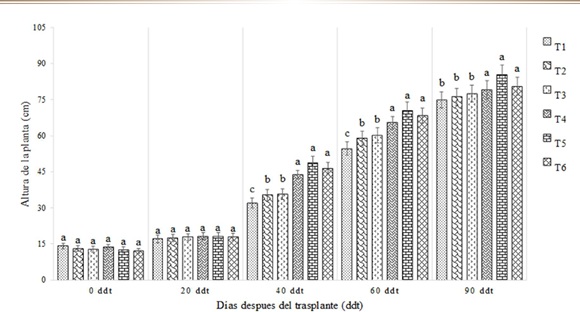
EC 0.85 dS m–¹, CEC 49.14 me 100 g–¹). Bioferment Bio.3 showed the highest ef fectiveness, producing plants with an average height of 79.1 cm and fruits weighing 203 g, values statistically similar to those obtained with conventional fertilization (85.3 cm and 200–207 g). All biofertilizers complied with microbiological standards and were free of pathogens. The findings demonstrate that the organic substrate combined with Bio.3 constitutes a technically viable and environmentally sustainable alternative for greenhouse bell pepper production, providing yields and fruit quality comparable to conventional systems while promoting circular economy principles and reducing dependence on synthetic inputs.
Downloads
Publication Facts
Reviewer profiles N/A
Author statements
- Editor & editorial board
- profiles
- Academic society
- Terra Latinoamericana
- Publisher
- Mexican Society of Soil Science, C.A.

To learn about these publication facts, click 
PF is maintained by the Public Knowledge Project