Effect of Microbial Biostimulants on Fruit Yield and Fruit Quality of Cherry Tomato (Solanum lycopersicum L. var. cerasiforme)
DOI:
https://doi.org/10.28940/terralatinoamericana.v44i.2418Keywords:
Azospirillum brasilense, bioactive compounds, greenhouse conditions, physicochemical propertiesAbstract
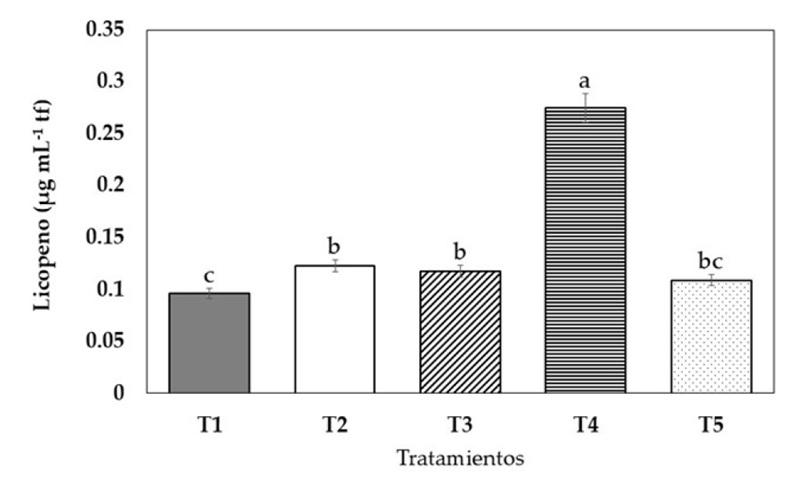
Cherry tomato (Solanum lycopersicum var. cerasiforme) is a crop of great economic importance due to its high demand for fresh consumption and the benefits of its bioactive compounds for human health. However, the excessive use of agrochemicals in its cultivation has generated negative effects on the environment and on human and animal health. Therefore, alternatives are being sought to reduce these effects, such as plant biostimulant microorganisms. The objective of this study was to evaluate the effect of Trichoderma harzianum, Bacillus subtilis, and Azospirillum brasilense as biostimulants on quality and yield parameters of greenhouse-grown cherry tomato. A completely randomized experimental design with five treatments and 44 replicates per treatment was used: T1 = 100% chemical fertilizer (CF); T2 = 50% CF + T. harzianum; T3 = 50% CF + B. subtilis; T4 = 50% CF + A. brasilense; and T5 = 50% CF + consortium (T. harzianum, B. subtilis, and A. brasilense). Morphological and physicochemical variables, as well as bioactive compounds of the fruit, were evaluated. The results were subjected to analysis of variance (ANOVA) and Tukey’s test (p < 0.05) using STATISTICA v. 12.0 for Windows. Statistical analysis showed significant differences among treatments, with plants in Treatment 4 (50% CF + A. brasilense) exhibiting the highest values for bunch weight, fruit weight, equatorial and polar diameter, total soluble solids (TSS), vitamin C, lycopene, β-carotene, color, and yield. These results suggest that inoculation with Azospirillum brasilense combined with a reduced dose of chemical fertilizer may represent an alternative strategy to increase the quality and yield of cherry tomato under greenhouse conditions.
Downloads
Publication Facts
Reviewer profiles N/A
Author statements
- Editor & editorial board
- profiles
- Academic society
- Terra Latinoamericana
- Publisher
- Mexican Society of Soil Science, C.A.

To learn about these publication facts, click 
PF is maintained by the Public Knowledge Project
References
Abdenaceur, R., Farida, B. T., Mourad, D., Rima, H., Zahia, O., & Fatma, S. H. (2022). Effective biofertilizer Trichoderma spp. isolates with enzymatic activity and metabolites enhancing plant growth. International Microbiology, 25(4), 817-829. https://doi.org/10.1007/s10123-022-00263-8
Adame-García, J., Murillo-Cuevas, F. D., Cabrera-Mireles, H., Villegas-Narváez, J., Rivera-Meza, A. E., & Vásquez-Hernández, A. (2023). Efecto de bioestimulantes microbianos en frutos de chile morrón y jitomate producidos en macrotúnel. Biotecnia, 25(1), 81-87. https://doi.org/10.18633/biotecnia.v25i1.1772
Adedayo, A. A., Babalola, O. O., Prigent-Combaret, C., Cruz, C., Stefan, M., Kutu, F., & Glick, B. R. (2022). The application of plant growth-promoting rhizobacteria in Solanum lycopersicum production in the agricultural system: a review. PeerJ, 10, e13405. https://doi.org/10.7717/peerj.13405
AgroScience® (2025). Catálogo de productos. Obtenido en la Red Mundial el 7 de agosto de 2025. https://agroscience.com/wp-content/uploads/2020/01/ASCatalogo-AGROSCIENCE-2020.pdf
Ali, M. Y., Sina, A. A., Khandker, S. S., Neesa, L., Tanvir, E. M., Kabir, A., Khalil, M. I., & Gan, S. H. (2020). Nutritional composition and bioactive compounds in tomatoes and their impact on human health and disease: A Review. Foods (Basel, Switzerland), 10(1), 45. https://doi.org/10.3390/foods10010045
Andrade-Sifuentes, A., Fortis-Hernández, M., Preciado-Rangel, P., Orozco-Vidal, J. A, Yescas-Coronado, P., & Rueda-Puente, E. O. (2020). Azospirillum brasilense y estiércol solarizado sobre la producción y calidad fitoquímica de frutos de tomate (Solanum lycopersicum L.). Agronomía, 10 (12), 1956. https://doi.org/10.3390/agronomy10121956
AOAC International. (2005). Official methods of analysis of AOAC International (18th ed.). Method 942.15. AOAC International.
Argentel-Martínez, L., Peñuelas-Rubio, O., Herrera-Sepúlveda, A., González-Aguilera, J., Sudheer, S., Salim, L. M., ... & Azizoglu, U. (2025). Biotechnological advances in plant growth-promoting rhizobacteria for sustainable agriculture. World Journal of Microbiology and Biotechnology, 41(1), 21. https://doi.org/10.1007/s11274-024-04231-4
Carvajal-Mena, N., Medina-Correa, R., Quintana, R., Shene, C., & Leiva-Vega, J. (2022). Effect of a turmeric-based fertilizer on tomato production at green-house level. Agro sur, 50(3), 1-13. https://doi.org/10.4206/agrosur.2022.v50n3-01
Consentino, B. B., Aprile, S., Rouphael, Y., Ntatsi, G., De Pasquale, C., Iapichino, G., & Sabatino, L. (2022). Application of PGPB combined with variable N doses affects growth, yield-related traits, N fertilizer efficiency and nutritional status of lettuce grown under controlled condition. Agronomy, 12(2), 236. https://doi.org/10.3390/agronomy12020236
Dantas, L. O., Maia, A. G., Moreno, M. N., Melo, N. G. M., de Souza, R. P., de Souza, R. A. T., & Martim, S. R. (2021). Análise físico-química e microbiológica de tomates cereja (Solanum lycopersicum var. cesariforme) comercializados em empórios de Manaus-AM. Research, Society and Development, 10(15), e527101523276-e527101523276. https://doi.org/10.33448/rsd-v10i15.23276
De la Osa, C., Rodríguez, C. M. Á., Gandullo, J., Aranda, C., Megías, M., Ollero, F. J., & Monreal, J. A. (2021). Plant growth-promoting rhizobacteria modulate the concentration of bioactive compounds in tomato fruits. Separations, 8(11), 223. https://doi.org/10.3390/separations8110223
Ertek Tosun, N., & Uzundumlu, A. S. (2025). Cherry production forecasting of leading Countries in 2024–2028. Applied Fruit Science, 67(2), 67. https://doi.org/10.1007/s10341-025-01290-1
Fonseca, M. D. C. D., Bossolani, J. W., de Oliveira, S. L., Moretti, L. G., Portugal, J. R., Scudeletti, D., ... & Crusciol, C. A. C. (2022). Bacillus subtilis inoculation improves nutrient uptake and physiological activity in sugarcane under drought stress. Microorganisms, 10(4), 809. https://doi.org/10.3390/microorganisms10040809
Gómez, S. L., González, D., & Pérez, R. (2019). Impact of organic fertilizers on tomato fruit quality and carotenoid composition. Horticulturae, 5(2), 37. https://doi.org/10.3390/horticulturae5020037
Ganusova, E. E., Banerjee, I., Seats, T., & Alexandre, G. (2025). Indole-3-acetic acid (IAA) protects Azospirillum brasilense from indole-induced stress. Applied and Environmental Microbiology, 91(4), e02384-24. https://doi.org/10.1128/aem.02384-24
Hernández-Montiel, L. G., Murillo, A. B., Chiquito, C. C. J., Zuñiga, C. C. E., Ruiz, R. J., & Chiquito, C. R. G. (2020). Respuesta morfo-productiva de plantas de pimiento morrón biofertilizadas con Pseudomonas putida y dosis reducida de fertilizantes sintéticos en invernadero. Terra Latinoamericana, 38(3), 583-596. https://doi.org/10.28940/terra.v38i3.651
Hungria, M., Barbosa, J. Z., Rondina, A. B. L., & Nogueira, M. A. (2022). Improving maize sustainability with partial replacement of N fertilizers by inoculation with Azospirillum brasilense. Agronomy Journal, 114(5), 2969-2980. https://doi.org/10.1002/agj2.21150
Illescas, M., Pedrero-Méndez, A., Pitorini-Bovolini, M., Hermosa, R., & Monte, E. (2021). Phytohormone production profiles in Trichoderma species and their relationship to wheat plant responses to water stress. Pathogens, 10(8), 991. https://doi.org/10.3390/pathogens10080991.
Ikiz, B., Dasgan, H. Y., & Gruda, N. S. (2024). Utilizing the power of plant growth promoting rhizobacteria on reducing mineral fertilizer, improved yield, and nutritional quality of Batavia lettuce in a floating culture. Scientific Reports, 14(1), 1616. https://doi.org/10.1038/s41598-024-51818-w
International Commission on Illumination. (2004). Colorimetry (3rd ed.; CIE Publication No. 15:2004). CIE Central Bureau. https://cielab.xyz/pdf/cie.15.2004%20colorimetry.pdf
Kandel, S.L., Herschberger, N., Kim, S. H., & Doty, S. L. (2015). Diazotrophic endophytes of poplar and willow for growth promotion of rice plants in nitrogen-limited conditions. Crop Sci. 55, 1765–1772. https://doi.org/10.2135/cropsci2014.08.0570
Khosravi, H., Khoshru, B., Nosratabad, A. F., & Mitra, D. (2024). Exploring the landscape of biofertilizers containing plant growth-promoting rhizobacteria in Iran: Progress and research prospects. Current Research in Microbial Sciences, 7, 100268. https://doi.org/10.1016/j.crmicr.2024.100268
Kobua, C. K., Jou, Y. T., & Wang, Y. M. (2021). Advantages of amending chemical fertilizer with plant-growth-promoting rhizobacteria under alternate wetting drying rice cultivation. Agriculture, 11(7), 605. https://doi.org/10.3390/agriculture11070605
Li, X., Huang, H., Zhang, L., & Zhao, L. (2025). Effect of postharvest storage temperature and duration on tomato fruit quality Foods (Basel, Switzerland), 14(6), 1002. https://doi.org/10.3390/foods14061002
Li, J., Liu, F., Wu, Y., Tang, Z., Zhang, D., Lyu, J., ... & Yu, J. (2024). Evaluation of nutritional composition, biochemical, and quality attributes of different varieties of tomato (Solanum lycopersicum L.). Journal of Food Composition and Analysis, 132, 106384. https://doi.org/10.1016/j.jfca.2024.106384
Miller, D. D. (2001) “Ácido ascórbico: estabilidad y capacidad de lixiviación”. Química de Alimentos Manual de laboratorio, p. 83-91.
Nagata, M. y Yamashita, I. (1992). Simple method for simultaneous determination of chlorophyll and carotenoids in tomato fruit. Japanese Soc. Food Sci. Techn. 39:925 - 928.
Nguyen, M.L., Spaepen, S., Jardin, P., & Delaplace, P. (2018). Biostimulant effects of rhizobacteria on wheat growth and nutrient uptake depend on nitrogen application and plant development. Arch. Agron. Soil Sci. 65, 58–73. https://doi.org/10.1080/03650340.2018.1485074
Omer, A. M., Osman, M. S., & Badawy, A. A. (2022). Inoculation with Azospirillum brasilense and/or Pseudomonas geniculata reinforces flax (Linum usitatissimum) growth by improving physiological activities under saline soil conditions. Botanical Studies, 63(1), 15. https://doi.org/10.1186/s40529-022-00345-w
Paciolla, C., Fortunato, S., Dipierro, N., Paradiso, A., De Leonardis, S., Mastropasqua, L., & de Pinto, M. C. (2019). Vitamin C in plants: from functions to biofortification. Antioxidants (Basel, Switzerland), 8(11), 519. https://doi.org/10.3390/antiox8110519
Pandurangaiah, S., Sadashiva, A. T., Shivashankar, K. S., SudhakarRao, D. V., & Ravishankar, K. V. (2020). Carotenoid content in cherry tomatoes correlated to the color space values l*, a*, b*: A non-destructive method of estimation. Journal of Horticultural Sciences, 15(1), 27-34.
Pelagio-Flores, R., Ravelo-Ortega, G., García-Pineda, E., & López-Bucio, J. (2025). A century of Azospirillum: plant growth promotion and agricultural promise. Plant Signaling & Behavior, 20(1), 2551609. https://doi.org/10.1080/15592324.2025.2551609
Pérez-Marín, J., Issa-Issa, H., Clemente-Villalba, J., García-Garví, J. M., Hernández, F., Carbonell-Barrachina, Á. A., Calín-Sánchez, Á., & Noguera-Artiaga, L. (2021). Physicochemical, volatile, and sensory characterization of promising cherry tomato (Solanum lycopersicum L.) cultivars: fresh market aptitudes of pear and round fruits. Agronomy, 11(4), 618. https://doi.org/10.3390/agronomy11040618
Pérez-Rodriguez, M. M., Pontin, M., Lipinski, V., Bottini, R., Piccoli, P., & Cohen, A. C. (2020). Pseudomonas fluorescens and Azospirillum brasilense increase yield and fruit quality of tomato under field conditions. Journal of Soil Science and Plant Nutrition, 20(4), 1614-1624. https://doi.org/10.1007/s42729-020-00233-x
Poveda, J., & González-Andrés, F. (2021). Bacillus as a source of phytohormones for use in agriculture. Applied Microbiology and Biotechnology, 105(23), 8629-8645. https://doi.org/10.1007/s00253-021-11492-8
Rawal, R, Scheerens, J. C, Fenstemaker, S. M, Francis, D. M, Miller, S. A. & Benitez, M.S. (2022). Nuevos aislamientos de Trichoderma alivian el estrés por déficit hídrico en genotipos susceptibles de tomate. Front. Plant Sci. 13:869090. https://doi.org/10.3389/fpls.2022.869090
Reid, T. E., Kavamura, V. N., Abadie, M., Torres-Ballesteros, A., Pawlett, M., Clark, I. M., ... & Mauchline, T. H. (2021). Inorganic chemical fertilizer application to wheat reduces the abundance of putative plant growth-promoting rhizobacteria. Frontiers in Microbiology, 12, 642587. https://doi.org/10.3389/fmicb.2021.642587
Sánchez-Hernández, G. A., Aceves-Ruiz, E., Aparicio-Juárez, A., Guerrero-Rodríguez, J. D. D., Olvera-Hernández, J. I., Hernández-Salgado, J. H., & Álvarez-Calderón, N. M. (2023). Fertilización química e inoculación con Azospirillum y hongos micorrízicos del cultivo de jitomate en invernadero. Terra Latinoamericana, 41. https://doi.org/10.28940/terra.v41i0.991
SIAP (Servicio de Información Agroalimentaria y Pesquera). (2024). Panorama agroalimentario 2018-2024 [Informe]. Gobierno de México. Consultado el 18 de Agosto de 2025, desde https://panorama.agricultura.gob.mx/vista/panorama-agroalimentario.php.
Shi, T. S., Collins, S. L., Yu, K., Peñuelas, J., Sardans, J., Li, H., & Ye, J. S. (2024). A global meta-analysis on the effects of organic and inorganic fertilization on grasslands and croplands. Nature communications, 15(1), 3411. https://doi.org/10.1038/s41467-024-47829-w
Stefen, D. L. V., Nunes, F. R., Rodolfo, G. R., Segatto, C., Anastácio, T. C., & Lajus, C. R. (2022). How phytohormones synthesized by PGPR affect plant growth?. In Secondary metabolites and volatiles of PGPR in plant-growth promotion (pp. 119-131). Cham: Springer International Publishing.
Sun, W., Shahrajabian, M. H., & Wang, N. (2025). A study of the different strains of the genus Azospirillum spp. on increasing productivity and stress resilience in plants. Plants, 14(2), 267. https://doi.org/10.3390/plants14020267
Sun, W., & Shahrajabian, M. H. (2025). Biostimulant and beyond: Bacillus spp., the important plant growth-promoting rhizobacteria (PGPR)-based biostimulant for sustainable agriculture. Earth Systems and Environment, 1-34. https://doi.org/10.1007/s41748-024-00552-4
Tagkas, C. F., Rizos, E. C., Markozannes, G., Karalexi, M. A., Wairegi, L., & Ntzani, E. E. (2024). Fertilizers and Human Health-A Systematic Review of the Epidemiological Evidence. Toxics, 12(10), 694. https://doi.org/10.3390/toxics12100694
Tolasa, M., Gedamu, F. & Woldetsadik, K. (2021). Impacto de las etapas de cosecha y los tratamientos previos al almacenamiento en la vida útil y la calidad del tomate (Solanum lycopersicum L.). Cogent Food & Agriculture, 7(1). https://doi.org/10.1080/23311932.2020.1863620
Tóth, E., Csambalik, L., Biró, B., Gere, A., Koren, D., Kotroczó, Z. & Szalai, Z. (2024). Are the Nutritional Properties of Organic Tomatoes Altered by Single and Combined Microbial Soil Inoculants?: A Multiperspective Approach. Journal of Plant Growth Regulation, 43, 3718–3728. https://doi.org/10.1007/s00344-024-11358-z
Tsouvaltzis, P., Gkountina, S., & Siomos, A. S. (2023). Quality traits and nutritional components of cherry tomato in relation to the harvesting period, storage duration and fruit position in the truss. Plants, 12(2), 315. https://doi.org/10.3390/plants12020315
Tsegaye, Z., & Tamiru, T. (2025). Enhancing tef growth and yield through integrated application of plant growth-promoting rhizobacteria and reduced chemical fertilizers. Journal of Genetic Resources, 11(1), 88-97. DOI: https://doi.org/10.22080/jgr.2025.28282.1413
Vukelić, I. D., Prokić, L. T., Racić, G. M., Pešić, M. B., Bojović, M. M., Sierka, E. M., & Panković, D. M. (2021). Effects of Trichoderma harzianum on photosynthetic characteristics and fruit quality of tomato plants. International Journal of Molecular Sciences, 22(13), 6961. https://doi.org/10.3390/ijms22136961
Vultaggio, L., Ciriello, M., Campana, E., Bellitto, P., Consentino, B.B, Rouphael, Y., Colla, G., Mancuso, F., La Bella, S., Napoli, S. y Sabatino, L. (2024). Aplicación única o combinada de bioestimulantes vegetales no microbianos y Trichoderma atroviride como nueva estrategia para mejorar el rendimiento del tomate cherry en invernadero. Plantas, 13(21), 3048. https://doi.org/10.3390/plants13213048
Wang, C., Zhang, Y., Wang, S., Lv, X., Xu, J., Zhang, X., Yang, Q., Meng, F. & Xu, B. (2024). Differential effects of domesticated and wild Capsicum frutescens L. on microbial community assembly and metabolic functions in rhizosphere soil. Frontiers in Microbiology, 15, 1383526. https://doi.org/10.3389/fmicb.2024.1383526
Zaheer, M. S., Ali, H. H., Iqbal, M. A., Erinle, K. O., Javed, T., Iqbal, J., & Dessoky, E. S. (2022). Cytokinin Production by Azospirillum brasilense contributes to increase in growth, yield, antioxidant, and physiological systems of wheat (Triticum aestivum L.). Frontiers in Microbiology, 13, 886041. https://doi.org/10.3389/fmicb.2022.886041