Agro-Ecological Zoning of Stevia Cultivation in the Ríos Subregion, Tabasco, Mexico
DOI:
https://doi.org/10.28940/terralatinoamericana.v43i.2145Keywords:
agricultural suitability, spatial analysis, edaphoclimatic conditions, edaphic factors, GISAbstract
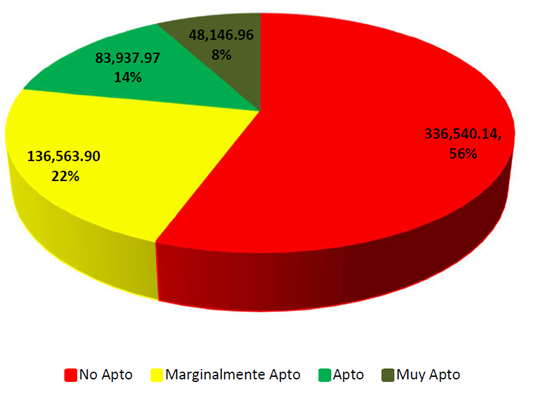
Globally, a sector of the food and pharmaceutical industries demands large quantities of stevia (Stevia rebaudiana), and Mexico may have areas with high potential for its cultivation. However, agroecological zoning studies for the establishment of stevia as a new crop are lacking. Therefore, the objective of this study was to characterize the agroecological zones suitable for stevia cultivation in the Los Ríos subregion, in the state of Tabasco. The agroecological zoning (AEZ) methodology of the FAO was used, adapted to the specific conditions of the study area and based on available regional information, considering climate (temperature and precipitation), land suitability by edaphological units and subunits, soil texture, terrain slope, and legal restrictions associated with the presence of protected natural areas. The results indicate the existence of very suitable, suitable, and marginally suitable edaphoclimatic conditions for stevia cultivation. A total of 132 084.93 ha with varying potential for stevia plantations were identified, distributed across the three municipalities of the subregion, including 156 localities. Of this potential area, 48 146.96 ha present favorable climatic and edaphic conditions, while 83 937.97 ha show some degree of restriction, which can be improved through appropriate management. The physical properties of the soil, particularly the composition of edaphological units and texture, constitute a limiting factor for crop establishment, given the predominance of clayey soils in the subregion.
Downloads
Publication Facts
Reviewer profiles N/A
Author statements
- Editor & editorial board
- profiles
- Academic society
- Terra Latinoamericana
- Publisher
- Mexican Society of Soil Science, C.A.

To learn about these publication facts, click 
PF is maintained by the Public Knowledge Project