Impact of Soil Characteristics on the Nutraceutical Composition of Melon Fruits
DOI:
https://doi.org/10.28940/terralatinoamericana.v44i.2428Keywords:
Cucumis melo L., nutraceutical quality, soil analysisAbstract
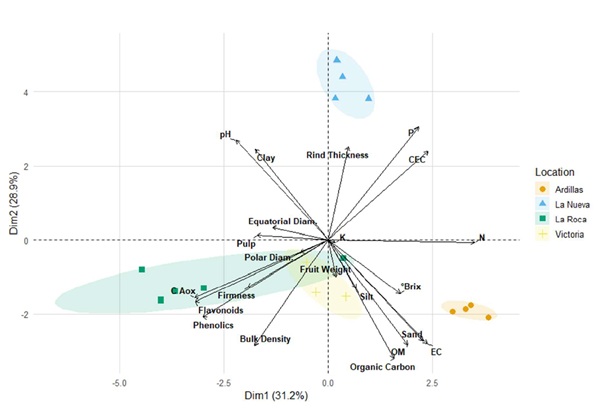
The nutraceutical quality of Cucumis melo L. fruits is influenced by edaphic conditions, particularly in arid and semiarid regions where salinity, alkalinity, and low fertility are common. This study aimed to evaluate the relationship between soil physicochemical properties and the commercial and nutraceutical quality of melon fruits in four orchards located in Matamoros, Coahuila, Mexico. Soil analyses were conducted following the NOM-021-SEMARNAT-2000 standard, and fruit quality parameters were determined, including soluble solids, firmness, rind thickness, and the content of bioactive compounds (phenolics, flavonoids, and antioxidant capacity). Results indicated that, although fruit size and weight were homogeneous among sites, nutraceutical quality showed significant variation. The “La Roca” site exhibited the highest levels of functional compounds, while “Ardillas” stood out for its sweetness. Spearman’s correlation and principal component analyses revealed significant associations between soil organic matter, texture, and nutraceutical quality. These results highlight the impact of edaphic characteristics on the functional quality of melon fruits, providing a basis for implementing soil management strategies to enhance the nutraceutical value of melon crops in arid and semiarid conditions.
Downloads
Publication Facts
Reviewer profiles N/A
Author statements
- Editor & editorial board
- profiles
- Academic society
- Terra Latinoamericana
- Publisher
- Mexican Society of Soil Science, C.A.

To learn about these publication facts, click 
PF is maintained by the Public Knowledge Project